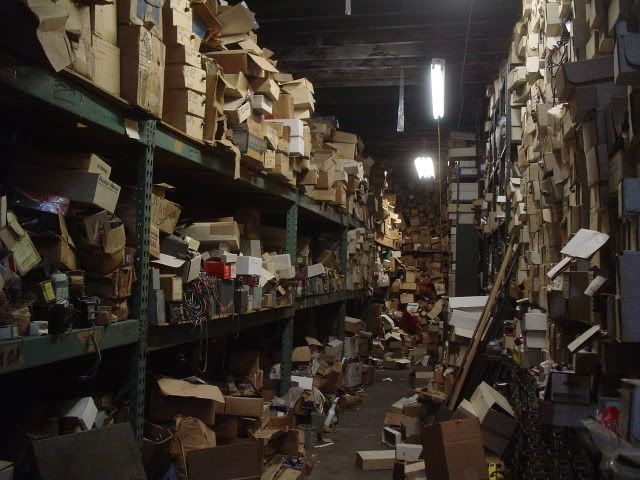
The goal of the overhaul is to get books to people to USE. To get books into the hands of teachers and kids. To make room for new books. To make room for the gradual shift that needs to happen to accommodate Common Core, new teachers, change, transitioning to a new Principal with a vision, to increase the pass rate, to evolve or die. The goal is far from accomplished. But the amazement lingers hours later.
What I saw was that many years ago, from what I could tell, twenty-five years ago, students were reading The Count of Monte Cristo, and A Tale of Two Cities, and a decade ago students were reading Walter Dean Meyers, Monster. And today, students (at least in our school) are struggling to read AT ALL. I feel judgmental about this observation.. And I have so many questions. Why? Let me say this. I LIKE Monster. I think the screenplay device is clever and works well as a tool at looking at the craft of constructing a novel. It's high interest. However, it is low, low level reading. Yes, perhaps the older books I found belonged to a highly advanced group of seniors in a special class. Or not. What accounts for what APPEARS to be a shift in reading ability among high school students? Screens? Smartphones? Increased malnutrition? The cycle of poverty is not new to this population. Is it worse? Is reading changing in such a way that novels are becoming obsolete or unnecessary? Do we get our sense of story elsewhere now? Is figurative language and metaphor no longer of use?::reaches for tissues::: <== is THAT what we have instead? Should we lament this change if it's real?
Some of the classics are still there. The Crucible. Romeo and Juliet. And I am not saying that one must teach the classics. I've heard an amazing argument from an incredibly wise Principal on why Shakespeare is perhaps not the best choice of literature for a curriculum these days. As much as this argument causes me great physical discomfort, (smirk), I have to admit it has *some* merit. (But DAMN IT, if done right Shakespeare is the ultimate guide to the wow of figurative language-- if you don't believe me, try Jonathan Lithgow's recent amazing words on playing King Lear in New York this summer). But I do think kids need to be exposed to AMAZING writing even if it is not so easy to get. They need to see the pay-off that comes with a crazy symbol (say,Marquez), a non-linear structure, multiple pov's, and they need to read about experiences that are vastly different from their own. Yes, you have to start at the very beginning (a very good place to start). Students need to learn the "classic story structure," so they can appreciate deviations. But they need exposure to some of the weird, good stuff. And some of the weird OLD stuff. There were sixteen copies of "The Metamorphosis." Or. Maybe. They. Don't. But they DO need to raise their reading levels in order to pass these crazy tests. They DO need to raise their reading levels in order to understand their smartphone bills (WOW are those bills complex). And somehow we need to help them to do this.
The Instructional Guides were also a mirror into the ups and downs and ins and outs of Educational Reforms. There were tons of manuals on the 90 minute block --the readers and writers workshops that are now starting to go out of fashion. There were clear attempts at Humanities as interpreted to mean--read a lot of fiction/historical fiction and poetry related to historical events. There were books insisting on the use of phonetics and direct grammatical instruction for struggling readers. There were books insisting on NOT using phonetics and direct grammatical instruction for struggling readers. There were guides to using audio guides. Some kinds of "behavioral field guides," likened to searching for an exotic bird. If the child behaves this way, turn to page six, if the child also exhibits this behavior, turn to page forty-four. I might be projecting, but it did seem to me that the more recent the manual, the more likely to have a tone that insinuated the lack of common sense on the part of the teacher--the books felt more "micro-managed' and less accepting of the tangent, the teachable moment, the creative journey that can and does happen when allowed. Some of the skills remained clear. Writing requires revision. Aim for simple sentences. The Elements of Style NEVER goes out of style (and wow the Maira Kalman illustrated edition is too awesome).
There was a single, torn copy of a book whose title could not be deciphered. When I opened it, all I could make out were the words, "keep reading, if you dare." Well said, mysterious mystery author, well said.
